If you spend any time outdoors in New Jersey, hiking in the Highlands, walking through a park, even letting your dog roam your backyard, Lyme disease is a real and present risk. New Jersey consistently ranks among the top states in the country for Lyme, and every spring, the question isn't really if ticks are out there. It's whether you're prepared.
The good news: Lyme disease is very preventable, and when caught early, very treatable. Here's what you actually need to know.
The Scale of the Problem
The CDC reports approximately 50,000 Lyme disease cases per year in the United States, but most infectious disease experts believe the true number is 10 times higher, closer to 500,000, because many cases go undiagnosed or unreported.
Prevention: The Practical Stuff That Actually Works
Prevention isn't complicated, it just requires a habit. Here's what to do:
- Use an EPA-registered repellent. DEET (20–30%) or Picaridin applied to exposed skin. For clothing and gear, permethrin is the gold standard, spray it on, let it dry, and it remains effective through multiple washes.
- Dress strategically. Light-colored clothing makes ticks easier to spot. Long sleeves and pants when you're in wooded or grassy areas.
- Tuck your pants into your socks. Yes, it looks dorky. It works. Ticks climb from the ground up, and this simple move blocks their path.
- Stay on trails. Ticks wait in leaf litter, tall grass, and low brush, not on paved or well-traveled paths.
- Avoid sitting directly on logs or the ground in wooded areas.
- Shower within 2 hours of coming indoors. This significantly reduces your risk, it washes off unattached ticks and gives you a chance to spot any that are crawling.
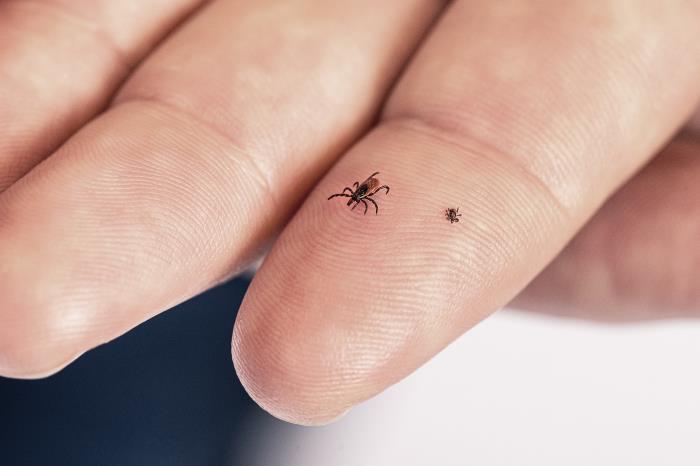
- Do a full-body tick check within 2 hours. Check everywhere: behind the ears, in the hair, behind the knees, in the groin, under the arms, and around the waist. Ticks are often the size of a poppy seed.
- Toss your clothes in the dryer on HIGH heat for 10 minutes before washing. The heat kills ticks; the washing machine alone does not.
- Check your pets. Dogs and cats can bring ticks inside. Run your fingers through their fur, especially around the collar, ears, and between the toes.
Symptoms: Three Stages to Know
Lyme doesn't always look the same, and that's part of why it gets missed. Here's how it typically progresses:
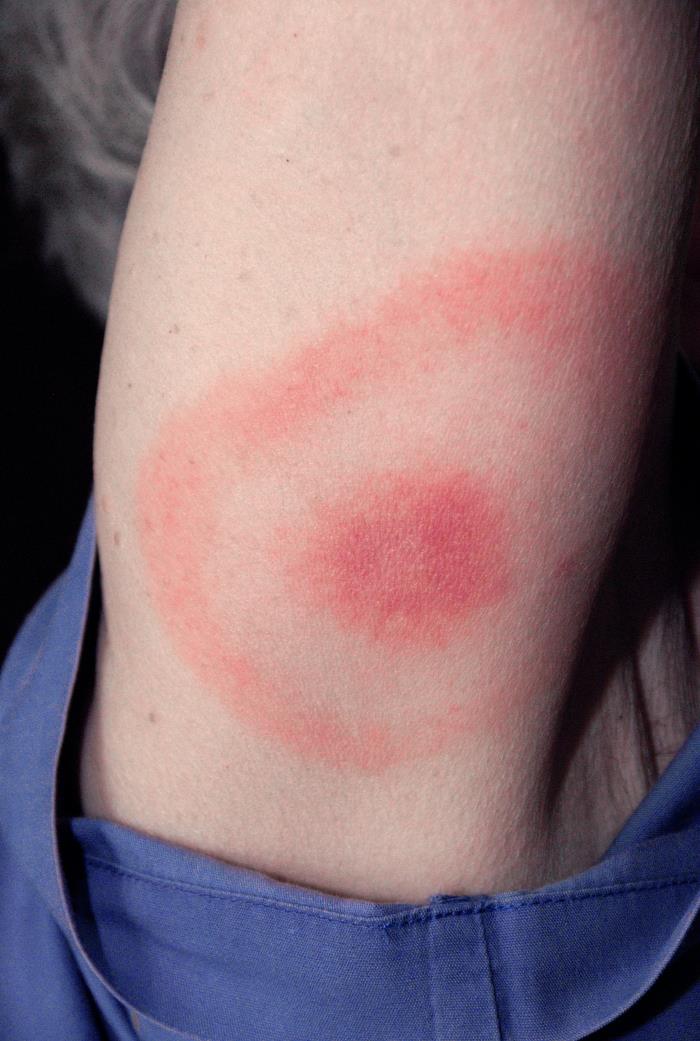
The most recognizable sign is the bull's-eye rash (erythema migrans), a red circle that gradually expands with a clearing in the center. It appears in about 70–80% of Lyme cases, but not all. Other symptoms: fatigue, fever, chills, headache, muscle and joint aches. It can feel like a bad flu. Many people don't connect it to a tick bite they may not have even noticed.
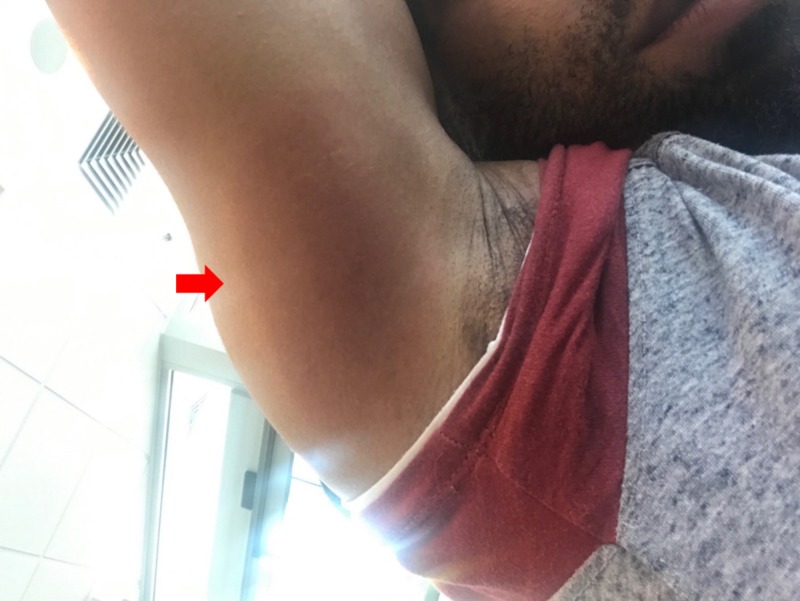
If the infection spreads, you may develop multiple rashes at sites away from the original bite, facial palsy (Bell's palsy), heart palpitations or irregular heartbeat, and more severe joint pain. This is when it starts to become more serious.
Lyme arthritis, intermittent or persistent swelling and pain in the large joints, especially the knees, is the hallmark of late-stage Lyme. Neurological symptoms including difficulty concentrating, memory issues, and nerve pain can also develop. Late Lyme is significantly harder to treat than early Lyme. This is why catching it early matters so much.
When Should You Call Your Doctor?
Don't wait and see if any of these apply to you:
- You found an embedded tick (especially one that appears to have been there for more than a day)
- You notice a rash at or near a bite site, bull's-eye or not
- You develop flu-like symptoms within a month of spending time outdoors
Early Lyme disease is typically treated with a course of doxycycline (usually 10–21 days). It works very well when started early. The longer Lyme goes untreated, the more complex and prolonged the treatment becomes, which is reason enough not to wait.
- New Jersey is one of the top states for Lyme disease. The risk is real, but so is your ability to prevent it.
- Ticks need 36–48 hours of attachment to transmit Lyme, regular tick checks after outdoor exposure are your best defense.
- DEET or Picaridin on skin, permethrin on clothes, light-colored clothing, and tucking pants into socks are all effective prevention tools.
- The bull's-eye rash is the classic sign, but Lyme can present as flu-like illness too, especially in early stages.
- Early treatment with doxycycline is highly effective. Late Lyme is much harder to treat. When in doubt, call your doctor.
- Centers for Disease Control and Prevention, Lyme Disease (cdc.gov/lyme)
- Mayo Clinic, Lyme Disease Overview
- New Jersey Department of Health, Lyme Disease Information
- Infectious Diseases Society of America, Lyme Disease Guidelines
- CDC Public Health Image Library, PHIL #28383 (tick size, Lauren Bishop / CDC, 2023); PHIL #9875 (erythema migrans, James Gathany / CDC, 2007). Both public domain.
- Dennison R, Novak C, Rebman A, et al. Lyme Disease with Erythema Migrans and Seventh Nerve Palsy in an African-American Man. Cureus. 2019;11(12):e6509. doi:10.7759/cureus.6509. Image reused under CC BY 4.0.
This post is for informational and educational purposes only and does not constitute medical advice. Please consult a licensed physician if you have concerns about tick exposure or Lyme disease symptoms.
Questions about your health? Dr. Nelly offers extended, unhurried visits, no rushing, no strangers.